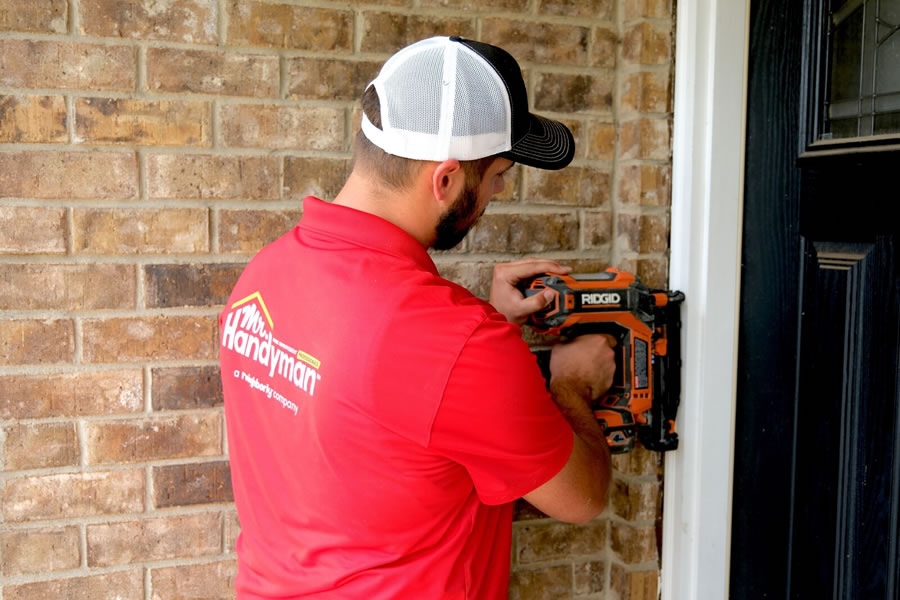
Several things will disturb the alignment. Hinge screws can loosen, hinges can bend, wood in the frame can swell after exposure to moisture, and movement in the surrounding structure can shift the opening slightly.
Notice what happens when you open and close the door. A lower corner that scrapes the threshold, a latch that doesn’t meet the strike plate correctly, or a door that takes an extra push to stay shut point to an alignment problem. You may also see that the space along the latch side is tighter in one area and wider in another.
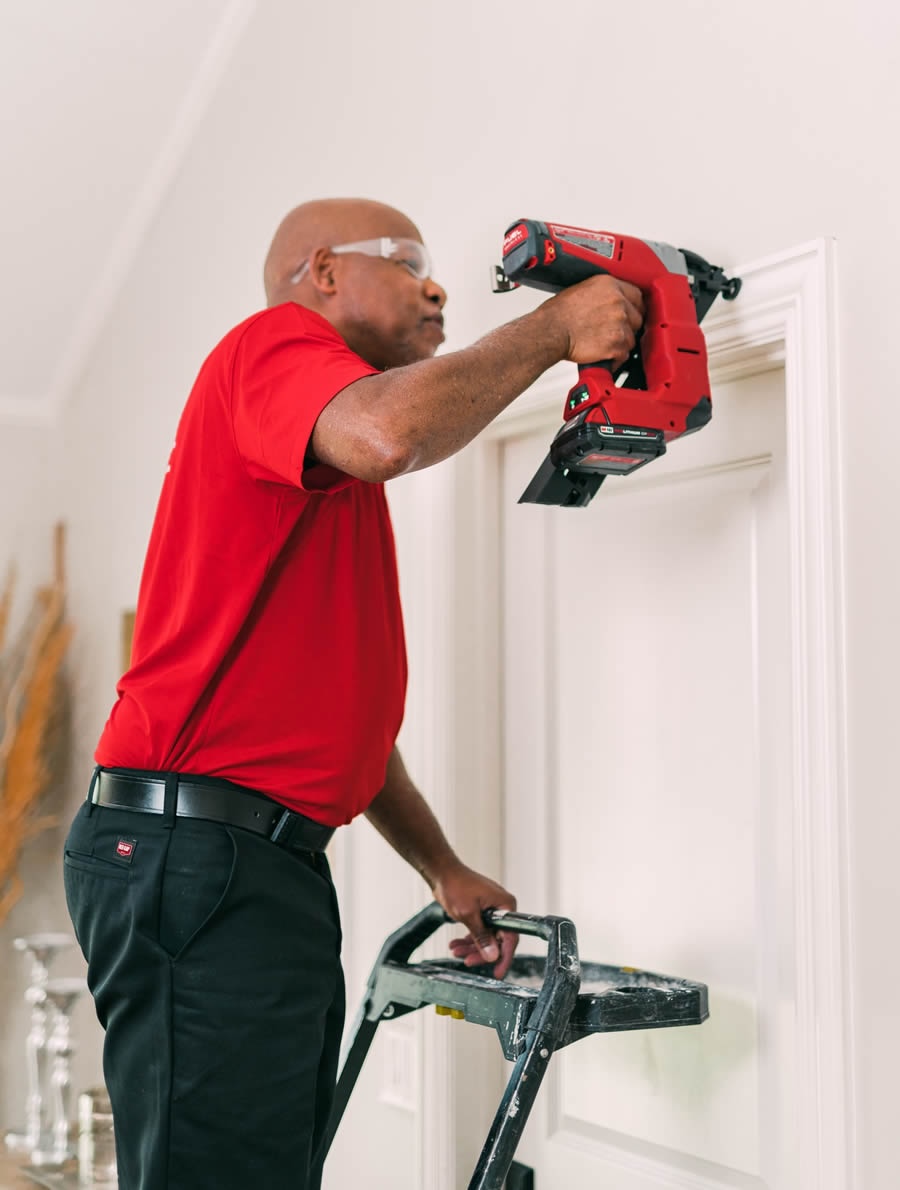
Weatherstripping works best when the door makes even contact around the frame. If the slab is sitting crooked, a new seal won’t fix the position of the door. A handyman service can check the hinges, screws, jamb, and strike plate to find out what shifted. The repair might involve tightening or replacing hardware, moving the strike plate, adjusting the hinges, or repairing a damaged section of the frame.
Damaged Thresholds Create Leaks Near the Floor
The bottom of the doorway has its own sealing system. The threshold sits across the sill beneath the door, while a sweep or bottom seal usually closes the remaining space between the slab and threshold. Because this area sees foot traffic, moisture, dirt, and repeated contact with the door, it has several ways to deteriorate.
A worn sweep leaves a narrow opening all the way across the bottom of the door. The threshold can also crack, loosen, or develop uneven spots that keep the bottom seal from touching it all the way across. Adjustable thresholds might fall out of position too, especially after years of use or earlier repair work.
A gap at floor level lets in more than outside air. Rainwater, insects, dirt, and debris may also find their way inside. Water is the bigger concern because moisture around the sill or lower jamb can lead to swollen wood, peeling finishes, and decay. If the wood underneath has already started to break down, swapping out the sweep won’t solve the whole issue.
Take a look at the bottom of the door from inside and outside. Check for daylight, ripped sweep material, cracks in the threshold, darkened wood, soft spots near the jamb, or signs that water has made it past the sill. A small sealing issue might only call for a new sweep or an adjustment to the threshold. If the nearby wood is damaged too, a more involved door repair may be needed before the entry seals correctly again.
Cracks Around the Frame Cause a Lot of Trouble
A draft doesn’t always come from the gap around the door. Air can also slip through spaces between the frame and the wall. Because the trim covers most of that area on both sides, the source can be hard to spot even when the door looks well-sealed.
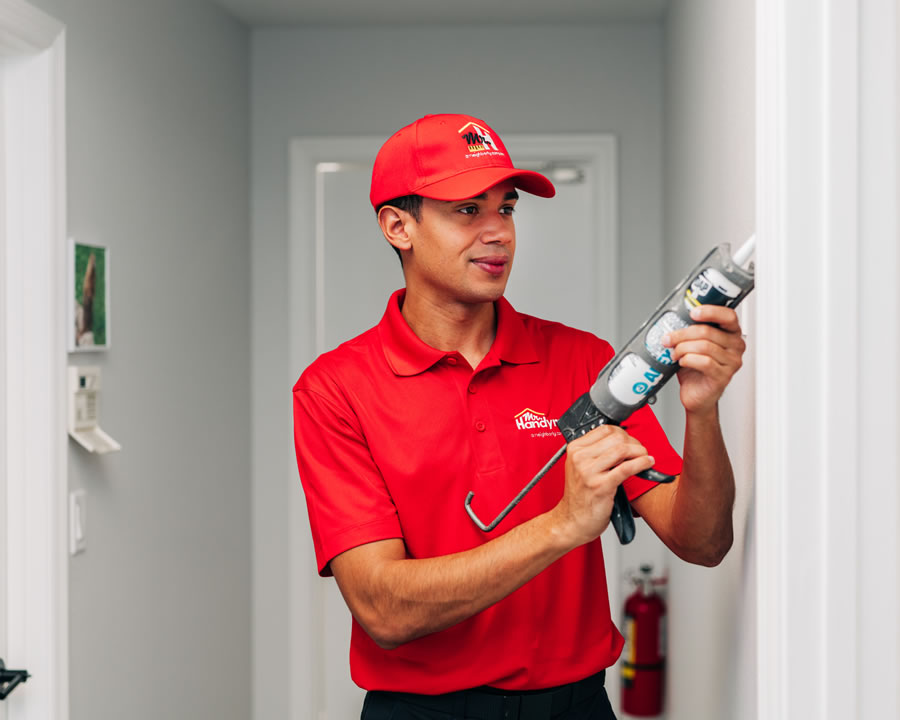
Gaps in this area can develop when caulk separates from exterior trim, insulation around the frame is incomplete, or portions of the jamb deteriorate. Exterior joints are exposed to rain, temperature changes, and direct sunlight. Once a sealant joint cracks or pulls away, air and moisture have a route behind the trim.
What needs to be fixed depends on where the opening is and whether anything around it has been damaged. A small gap may only need the old sealant scraped out and replaced with a new exterior-grade product. If the trim, jamb, or insulation has been affected, part of the area may need to be opened up before the leak can be sealed well. A handyman service will check the entire doorway and find the source instead of treating worn weatherstripping as the default cause.
Door Replacement May Make Sense When Repairs Keep Adding Up
When the door bows away from the frame, new weatherstripping may not stay in contact around the full edge. Serious rot in the jamb or sill creates another problem because hinges, screws, and seals all need solid wood behind them. Heavy water damage around the opening can also make repeated repairs less useful.
Look at the overall condition instead of one defect at a time. If the door is solid and only one part has failed, repair is still a reasonable option. If the slab is warped, the frame is deteriorating, the threshold is damaged, and the door keeps falling out of alignment, you’re dealing with several connected problems. Door replacement will correct more than one issue at once.
The condition of the existing entry also affects the installation. A new slab placed into a damaged frame doesn’t solve problems in the jamb or sill. In some cases, door replacement involves removing the old frame so the opening can be inspected and prepared before the new unit goes in. This allows hidden deterioration or sealing gaps around the rough opening to be taken care of as part of the project.
Are Hidden Air Leaks Driving Up Your Energy Costs?
If you’re deciding between another door repair and door replacement, call Mr. Handyman. We can inspect the door, frame, weatherstripping, threshold, and hardware to give you a clearer picture of what needs attention. Contact us today to schedule a home improvement service for your property.