Menu

Call This Friday to Get $25 OFF

Flush Mount vs Downrod Ceiling Fans Explained
27/Mar/2026

Shopping for a ceiling fan ought be straightforward. You need a fan, the store has fans, end of story… right? Sure, until you're standing in the aisle (or scrolling through page after page online) and confronted with terms like “hugger mount,” “close mount,” “standard downrod,” and “extended downrod.”

Flush Mount vs Downrod Ceiling Fans Explained

What started as a quick errand has turned into homework.

Here's the good news: the core decision is simpler than it looks. The two main mounting styles (flush mount and downrod) each exist for a specific reason. Once you understand what that reason is, the right choice becomes pretty clear.

In this brief article brought to you by Mr. Handyman, we break it down in simple terms. You’re always welcomed to call or message Mr. Handyman to consult a pro and schedule a reliable and affordable ceiling fan replacement.

The Basics of a Flush Mount Ceiling Fan

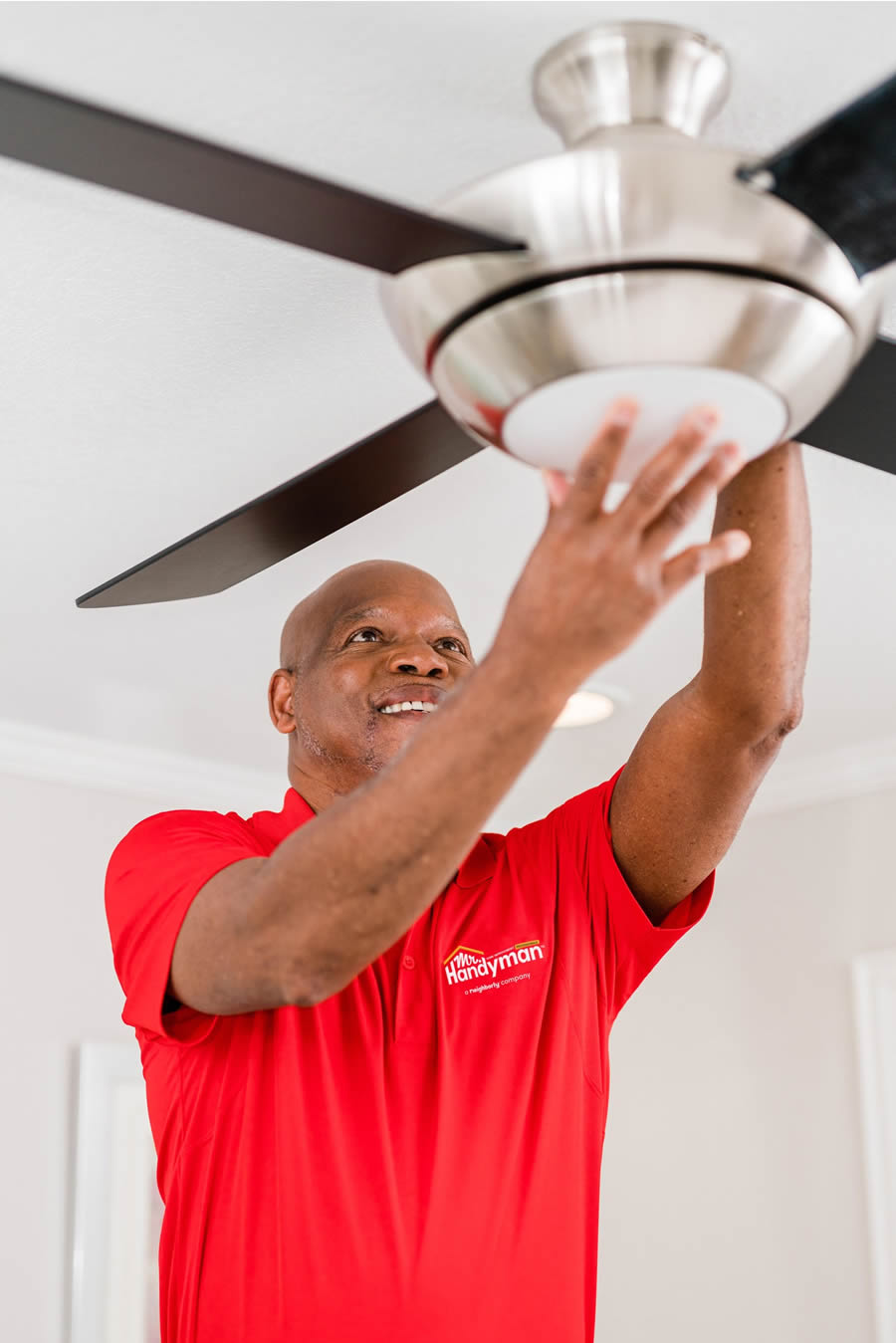
A flush mount ceiling fan (also called a hugger or close-mount fan) attaches directly to the ceiling with little to no gap between the motor housing and the ceiling surface. The blades sit just a few inches below the ceiling. These keep the entire unit as low-profile as possible.

Our Services

Mailbox Repair & Installation

Rust, a broken door, loose hinges, or a leaning post can make your mailbox unreliable. Since it sits…

Read More

TV Mounting

A new TV is always fun until you need to figure out where it belongs. Leaving it on…

Read More

Step & Stair Repair

Daily use takes a toll on steps and stairs. The creaks, wobbles, or cracks that show up might…

Read More

Railing Repair and Installation

For families with kids, aging parents, or frequent guests, railings keep activities safe. Mr. Handyman works with homeowners…

Read More

Caulking

Big renovations get attention, but the truth is, many of the problems inside a home start small. Gaps…

Read More

Painting Service

Color has a powerful effect on how a space feels. A fresh coat of paint can brighten a…

Read More

Trim Repair

Walk up to any house and your eye catches the trim before almost anything else. Around the garage,…

Read More

Storm Door Installation

Adding a storm door gives your entry a finished look and protects it from wind, rain, and extreme…

Read More

As you can imagine, these are ideal for low ceilings. In rooms where the ceiling height is eight feet or less, a low-lying fan would place the blades uncomfortably and dangerously close to head level. A flush mount fan addresses that problem.

Beyond the safety and clearance benefit, flush mount fans work well aesthetically in rooms where you want a compact and streamlined look. You’re not sacrificing features, though. Many modern flush mount models offer clean lines, integrated lighting, and remote or smart-home compatibility.

With that being said, the drawback is airflow efficiency – or inefficiency. Since flush mount fans sit so close to the ceiling, they don't circulate air quite as effectively as downrod fans do. After all, the minimal gap between the blades and the ceiling limits the fan's ability to pull air from above and push it downward.

The Basics of a Downrod Ceiling Fan

The aptly-named downrod fan hangs from a metal rod that suspends the motor and blades at a set distance below the ceiling. Standard downrods typically drop the fan eight to twelve inches, but extended downrods are available to accommodate your space.

The purpose of the downrod is twofold. First, it positions the blades at the optimal height for efficient air circulation… and energy-efficiency, actually.

Second, the downrod allows the fan to “clear” high ceilings. Think about it: a fan mounted flush to a twelve-foot ceiling is essentially decorative; the airflow never really reaches the people in the room. A downrod brings the fan to where it needs to be.

The visual impact of a downrod fan is also worth noting. In rooms with higher ceilings, a downrod fan fills the vertical space in a way that a flush mount cannot.

Your Ceiling Height is a Deciding Factor

The simplest way to approach this decision is to start with your ceiling height and work from there:

  • Eight Feet or Under: Go with a flush mount. Full stop. A downrod fan in a low-ceilinged room is a clearance hazard.
  • Nine to Ten Feet: The standard downrod fan works well here. The typical eight-to-twelve-inch drop places the blades right in the ideal airflow zone without bringing them uncomfortably close to head level.
  • Eleven Feet and Above: An extended downrod is the right call. Basically, the length of the rod should be calculated to position the blades at approximately eight to nine feet above the floor.

If you’ve got vaulted or angled ceilings, then you’ve got your work cut out for you. Luckily, the handyman team in Newtown Grant at Mr. Handyman can help. Getting this wrong is not just an aesthetic or performance issue; it’s a safety one, too.

Let Mr. Handyman Handle the Ceiling Fan

Choosing the right fan is the fun part. Installing it correctly is where things can get really, really frustrating. Lucky for residents in the area, Mr. Handyman offers professional handyman service.

As an established and insured business, we are proud to back our workmanship with a 1-year guarantee. Whether you need an initial installation or a ceiling fan replacement, the team at Mr. Handyman has the expertise, experience, and equipment to get the job done the first time around.


Social Media :
Latest Updates

Recent Posts

Flush Mount vs Downrod Ceiling Fans Explained 27 Mar, 2026
27 Mar, 2026

Flush Mount vs Downrod Ceiling Fans Explained

Shopping for a ceiling fan ought be straightforward. You need a fan, the store has fans, end of story… right? Sure,…

Read More
The Benefits of Weatherproofing Your Windows, Doors, and Roof 23 Mar, 2026
23 Mar, 2026

The Benefits of Weatherproofing Your Windows, Doors, and Roof

When your indoor spaces feel extremely drafty even after closing the windows and doors, it is time to consider weatherproofing your…

Read More
Should You Mount Your TV Yourself or Hire a Professional? 16 Mar, 2026
16 Mar, 2026

Should You Mount Your TV Yourself or Hire a Professional?

There's a certain satisfaction to mounting your own TV. You might be tempted if you've got a free Saturday, a drill…

Read More
Is Peeling Paint a Sign of Siding Damage? 09 Mar, 2026
09 Mar, 2026

Is Peeling Paint a Sign of Siding Damage?

Siding offers benefits that extend far beyond aesthetic appeal. Modern American homes rely on layered protective systems including timber framing wrapped…

Read More